African players have long been integral to the success of European football, and the Bundesliga is no exception. With their exceptional performances, these players have captured the hearts of fans and become indispensable assets to their respective clubs.
In 2025, the league’s top players are celebrated for their incredible skills and earning some of the highest wages in German football. Based on data from Capology, we explore the highest-paid African footballers in Bundesliga in 2025.
Sébastien Haller of Borussia Dortmund tops the list as the highest-paid African player in the Bundesliga, earning an impressive €211,538 weekly. Borussia Dortmund is a dominant employer, featuring three African stars among the top five earners.
Players across Africa, including Mali, Guinea, and Algeria, shine brightly in Germany’s premier football league. In this article, we’ll take a look at the top-earning African footballers in the Bundesliga for 2025.
Highest-Paid African Footballers In Bundesliga 2025
Sébastien Haller leads the pack as the highest-paid African footballer in the Bundesliga. The Borussia Dortmund forward’s exceptional goal-scoring prowess has solidified his position as one of the league’s top stars. With weekly earnings of €211,538, Haller is a key figure in Dortmund’s pursuit of domestic and European success.
2. Serhou Guirassy (Guinea) – Borussia Dortmund (€181,346 per week)
Guinea’s Serhou Guirassy is another Borussia Dortmund standout. Known for his consistent scoring and ability to create chances, Guirassy earns €181,346 per week, reflecting his value to one of Germany’s top clubs. He is among the best African footballers according to EA Sports 25 rating.
3. Ramy Bensebaini (Algeria) – Borussia Dortmund (€86,538 per week)
A versatile defender and occasional goal scorer, Ramy Bensebaini has proven to be a vital part of Borussia Dortmund’s defensive setup. Earning €86,538 weekly, the Algerian international is one of the highest-paid defenders in the Bundesliga.
4. Diadie Samassekou (Mali) – TSG Hoffenheim (€75,000 per week)
Mali’s Diadie Samassekou is a midfield dynamo for TSG Hoffenheim. His €75,000 weekly wage underscores his importance in providing creativity and balance to the team’s midfield.
5. Amadou Haidara (Mali) – RB Leipzig (€73,077 per week)
Amadou Haidara’s box-to-box midfield capabilities make him a standout performer for RB Leipzig. With a weekly salary of €73,077, Haidara continues to demonstrate his value to one of the Bundesliga’s top clubs.
Full List of the Highest-Paid African Footballers in Bundesliga 2025
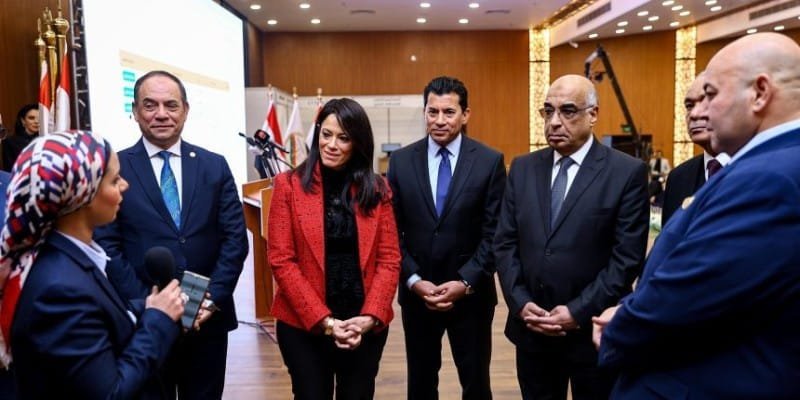
Egypt has taken a significant leap toward enhancing transparency and citizen engagement with the launch of two groundbreaking digital initiatives aimed at modernising the country’s governance: an e-voting system and a new complaints and performance measurement program. Unveiled at the Administrative Prosecution Authority, the event was marked by the presence of key officials, including Minister of Planning, Economic Development, and International Cooperation Rania Al-Mashat, Justice Minister Adnan Fangary, and Youth and Sports Minister Ashraf Sobhi. This move aligns with President Abdel Fattah Al-Sisi’s broader vision for a more efficient and digitally advanced government.
The launch of these projects follows the signing of a cooperation protocol in 2022 between the Ministry of Planning and the Administrative Prosecution Authority. This partnership aims to modernise information systems and streamline election processes, marking the beginning of a larger effort to digitise public services and ensure more transparent governance. Minister Al-Mashat highlighted the ongoing collaboration between national institutions like the Ministry of Justice and the Ministry of Youth and Sports, underscoring the importance of integrated, cross-departmental efforts to advance Egypt’s development goals.
The “Enhancing Government Performance” project is one of the flagship initiatives designed to assess and improve the delivery of public services. It aims to provide decision-makers with accurate data to close performance gaps within government agencies. By leveraging technology, the project empowers citizens to submit complaints via mobile apps, streamlining the complaints and feedback process. This shift not only promises more efficient service delivery but also promotes transparency and holds government agencies accountable for their performance. This initiative is aligned with Egypt’s Vision 2030, which prioritises governance, transparency, and active citizen engagement. It also supports the country’s National Anti-Corruption Strategy, contributing to the broader goals of achieving the United Nations’ 16th Sustainable Development Goal (SDG), which focuses on peace, justice, and strong institutions.
Another critical component of the launch is the e-voting system, which aims to replace traditional paper-based election methods with a more efficient, secure, and transparent electronic platform. The initiative has already been implemented in 16 elections, including those for the Musicians’ Syndicate and the Administrative Prosecution Authority Club, and it is designed to ensure a smoother, more cost-effective voting experience. The e-voting system also reduces the environmental impact of elections by cutting down on paper usage and lowering carbon emissions associated with transportation. The system promises to improve trust in the electoral process by minimising human error and ensuring more accurate results.
These initiatives are part of a broader push to digitally transform Egypt’s public services and foster greater citizen participation in governance. The complaints and performance measurement program provides an opportunity for citizens to voice their concerns directly while also contributing to the overall improvement of service quality. As more citizens engage with these digital platforms, the government aims to build a more responsive and efficient administration that meets the needs of its people.
Minister Al-Mashat emphasised that the launch of these projects is part of Egypt’s ongoing efforts to build a digital society that enhances governance and public sector accountability. She highlighted the commitment of the Ministry of Planning to continue fostering economic and social development through strong partnerships with other national institutions. This collaborative approach is seen as crucial to achieving Egypt’s Vision 2030 goals, which aim for a more modern and inclusive state.
The government’s focus on digital transformation not only promises to improve the quality of governance within Egypt but also positions the country as a regional leader in adopting innovative technologies to enhance public sector performance. With these initiatives, Egypt aims to build greater trust between its citizens and government, promoting active participation in national development and setting a precedent for other nations in the region to follow.
Last year, the African music scene witnessed several rookies take a leap forward and ascend to stardom. We saw the rapid rise of Ayo Maff,Qing Madi, and Uncle Waffles, who collectively delivered memorable projects and hit singles that resonated across the continent.
While 2024 did not produce an obvious breakout artist across all the top genres—such as Afrobeats, alté, highlife, amapiano, fuji, and more—several rising artists had a strong year, positioning themselves for a prosperous 2025.
As we step into 2025, African Folder is showcasing 15 of the brightest African artists we believe have the potential to shine even brighter this year. Here are the African artists we’re rooting for in 2025.
1. Llona (Nigeria)
2024 was the year of Llona. The Kano State native, armed with confidence in his craft, took a bold leap of faith by releasing his debut album, Homeless, while still a relative newcomer. Five months later, Llona is no longer a rookie. He has become one of the brightest gems in Nigerian music. Homeless was a resounding success, enjoying permanent residency on the Nigerian charts across all platforms. It catapulted Llona from a niche favourite to a mainstream sensation and expanded his fanbase exponentially.
In 2025, Llona’s stock is expected to continue rising as he aims to blossom into a household name.
2. ZerryDL (Nigeria)
One of the biggest beneficiaries of Shallipopi’s meteoric rise in 2023 was his brother, ZerryDL. Riding the wave of Shalli’s success, ZerryDL scored his breakout hit with Puff Puff Pass. However, in 2024, ZerryDL proved two critical points: first, that he isn’t a one-hit wonder, and second, that he possesses the talent and artistry to establish himself as a hitmaker in his own right—independent of his brother.
Despite starting the year with the poorly received Wara Wara Szn, ZerryDL bounced back emphatically in the final quarter of the year, scoring two major hit records—Back to Back and the Hausapiano remix—while lending swaggering verses to Bayanni and Ayo Maff. With his debut album in the works, Zerry is poised to leave his mark on Nigerian music in 2025.
As music consumers craved something different from the Amapiano fusion that dominated the better part of the last five years, FirstKlaz emerged as a refreshing force, offering a distinctly unique sound. His innovative blend of Afropop with Fuji—coined as Gen Z Fuji and Gen Z Faaji—and Arewa Pop, also known as Gen Z Arewa, injected much-needed vibrancy into the music scene.
Aiming to leave his mark on the Nigerian music industry, FirstKlaz is brimming with potential, especially following the success of his nationwide tour.
4. Arathejay (Ghana)
Arathejay is the latest Ghanaian talent making waves in Nigeria and across Africa. The multifaceted artist first found success in 2021 when his song Sankofa disrupted Ghanaian airwaves and charts, even earning the attention of King Promise, one of Ghana’s biggest stars. Since then, the artist—who describes his sound as spiritual—has come into his own, delivering music imbued with profound emotional depth.
Now, after releasing the Black Sherif-assisted Jesus Christ 2, Arathejay is determined to leave his mark on the world.
5. Tar1q (Nigeria)
Since its inception, Chocolate City has consistently introduced and nurtured emerging talents, with Tar1q leading the charge as a standout among the latest additions to the label’s roster. While his penchant for love and sex is reminiscent of his label mates Blaqbonez and Young Jonn, Tar1q masterfully engineers diverse sounds and topics, presenting them in ways that feel both refreshing and different. With three critically acclaimed EPs to his name, it’s evident that his incubation period has run its course. Now, it’s time for the Son of the Moon to become a superstar.
6. Winny (Nigeria)
Winny enjoyed a cool Detty December moment as Grammy award-winning superstar Wizkid showed off his newly acquired MClaren 750s with her song playing in the background. The song is the sultry reggae fusion Suh Good featuring Projexx off her 2024 album Commercial Break. A project described by Rolling Stone as a must-listen. With the awareness of the fact that Big Wiz is a fan of Winny’s music, one would hope the seminal superstar would not mind lending a career-propelling verse to the talented upstart. Regardless, Winny’s career trajectory is steadily climbing in the right direction; there will be no surprises if it all comes to a head in 2025.
7. Yarden (Nigeria)
While Yarden has enjoyed a well-deserved moment with the success of his viral single Wetin, he remains an artist worth keeping in the spotlight. The Port Harcourt native has yet to solidify his status as a bona fide star, despite his expansive talents. His debut project, The One Who Descends, left a mark on the music industry, while his vibrant performance on Ole—alongside DMW signee Logos Olori and Crayon—further underscores his exceptional talent and undeniable star quality.
After a relatively quiet 2024, Yarden is expected to shine brightly in 2025.
8. Taves (Nigeria)
For Taves, the question has never been if but when. His incredible talent is obvious to all, which is why it was no surprise when it was announced that he had signed with Atlantic Records UK early in the year. His debut EP, Are You Listening, houses memorable songs that enforce the fact that Taves is one for the present and the future.
9. Muyeez (Nigeria)
Street Pop’s teenage sensation, Muyeez, had a whirlwind year in 2024. He signed to a label, delivered a smash hit in the first quarter, released three EPs in rapid succession with chart-topping singles, and ultimately parted ways with the label. With the raw talent and unshakeable confidence of Seyi Vibez’s young protégé, it’s safe to say the journey is only just beginning—and it’s bound to get even wilder.
10. TML Vibez (Nigeria)
The streets remain a hotbed for emerging Nigerian talents, and TML Vibez is at the forefront of a new generation advancing street pop through a vibrant fusion of sounds. His debut year in the mainstream was filled with EPs, features, and electrifying live performances, as the 24-year-old wasted no time acclimating to the atmosphere of the Nigerian music industry.
With his feet firmly planted, the Vibez Inc. frontman is expected to deliver an album that cements his place in street folklore and propels him to superstardom.
Among the vanguard of female Afropop singers, Kold AF shines as a trailblazer, infusing the genre with fresh energy and innovation. Her boundless range, remarkable versatility, and commanding vocals, paired with a sharp lyrical prowess, have positioned her as a disruptive force in the industry. With a touch of feminine angst woven into her artistry, Kold AF is redefining the narrative and making her mark as a standout talent. Her versatility, anchored by her powerful voice, will have her taking over stages around the world.
12. Serøtonin
Serøtonin began to make waves in 2024 with his viral single May 10th, a fresh, groovy, playful Afrobeats record that is distinctly different. The record has racked up over 4 million streams on Spotify alone and earned the attention of Muyiwa Awoniyi, who manages Tems and Omah Lay. With proper backing, it is expected that his output will be significantly better in 2025 as he looks to leave his imprint on the Nigerian music scene. He sounds like he has a lot to offer.
13. Muthaka (Kenya)
The Kenyan singer-songwriter, Muthaka, has made a name for herself in the last four years with her luxury brand of R&B. She is a sucker for romance, and she wields her enchanting voice to captivate her listeners. The Afrimma award-winning superstar is one to keep an eye on as she continues to grow into one of the continent’s finest musicians.
14. Usimamane (South Africa)
South Africa remains a hotbed for some of Africa’s finest rap talents, and Usimamane is the newest star on the rise. At just 21 years old, this young upstart is quickly becoming a household name, racking up impressive streaming numbers across multiple DSPs. His penchant for a bouncy and youthful brand of American trap music, delivered in Zulu, is reminiscent of South African rap titan Nasty C in some ways.
Usimamane’s 2024 album, 20th: Days Before Maud, is a must-listen.
15. J Kree (Cameroon)
J Kree is the latest Cameroonian talent making waves across Africa. The versatile artist first gained recognition in 2021 when his debut track, Salivating, struck a chord with fans and marked the beginning of his journey as one of Cameroon’s brightest stars. Since then, the artist—who effortlessly blends New Wave, Alte, and Afro Fusion—has continued to carve out his own lane in the African music scene.
J Kree’s viral cover of Libianca’sPeople amassed over 700,000 streams, including 250,000 on Spotify, cementing his ability to connect with audiences on a deeper level. Now, his 2024 single Believe is inspiring a new wave of creativity.
Africa’s tech ecosystem has become a hotbed of innovation and opportunity, with startups addressing diverse industry challenges. From fintech to ed-tech, e-commerce to renewable energy, these companies are not just attracting investment but are also pushing boundaries with creative solutions tailored to the continent’s unique needs. Despite economic uncertainties and regulatory hurdles, many African startups thrive, often providing blueprints for scaling in emerging markets worldwide.
This list highlights 20 African startups leading the charge into 2025. They span various sectors, including digital finance, e-commerce, electric mobility, and ed-tech. These companies exemplify Africa’s innovative spirit, merging cutting-edge technology with local insights to solve real-world problems. One can see a clear roadmap for Africa’s growing influence on the global tech landscape by examining their strategies, accomplishments, and funding milestones.
With a focus on startups that are not only gaining traction locally but also expanding into regional and global markets, this collection showcases the continent’s potential as a hub of transformative ideas.
Here are the 20 African startups poised for success in 2025.
Founded in 2020 by Ananth Gudipati and Abhinav Solipuram, Sukhiba is reshaping Kenya’s e-commerce landscape with its innovative B2B conversational commerce platform. The startup allows customers to order products directly through WhatsApp, prioritizing convenience and personalization. By leveraging the familiarity of chat-based interactions, Sukhiba builds trust with its users, positioning itself as a preferred alternative to impersonal e-commerce sites.
Despite challenges in the e-commerce sector, Sukhiba has thrived, raising $1.5 million in 2024 while competitors scaled down operations. The funding underscores its resilience and market appeal, with the platform steadily gaining traction among businesses seeking direct and reliable communication with their suppliers and customers. Sukhiba’s approach highlights the growing demand for trust-driven digital commerce solutions in Africa.
2. KopoKopo (Kenya)
kopokopo staff [Credit: TechCabal]
Established in 2012 by Ben Lyon and Dylan Higgins, KopoKopo has been a pioneer in offering tailored payment and credit solutions for small and medium-sized businesses in Kenya. The startup carved out its niche in a market heavily dominated by banks and mobile money providers by addressing the unique needs of SMEs. Through KopoKopo’s platform, businesses can access seamless payment options and credit facilities, empowering them to scale and improve cash flow management.
In 2023, KopoKopo gained significant attention when it was acquired by Nigeria’s Moniepoint, marking a strategic expansion of the fintech giant into East Africa. The acquisition highlights KopoKopo’s value in driving financial inclusion and supporting underserved markets. As part of Moniepoint, KopoKopo is set to amplify its impact, leveraging the combined strengths of both entities to transform East Africa’s digital payment ecosystem.
3. Craydel (Kenya)
Craydel co-founders John Nguru, Manish Sardana and Shayne Aman Premji [Credit: Forbes Africa]
Launched in 2021 by John Nguru, Manish Sardana and Shayne Aman Premji, Craydel is revolutionizing Africa’s education consultancy landscape by offering a centralized platform for university applications. The startup connects students to over 600 partner universities across 45 countries, providing personalized recommendations and streamlining the study-abroad process. By addressing inefficiencies in Africa’s fragmented education system, Craydel ensures students can access quality higher education opportunities with ease.
In 2024, Craydel expanded its operations to Zimbabwe, further solidifying its position as a pan-African ed-tech leader. With its unified platform and extensive network of partner institutions, Craydel is transforming how students navigate academic opportunities, empowering the next generation to achieve their aspirations through education.
4. FoodCourt (Nigeria)
Foodcourt co-founders Henry Nneji, Ovuoke Buluku and Paul Adokiye Iruene, [Credit: Techpoint Africa]
Founded in 2021 by Henry Nneji, Ovuoke Bulukuand Paul Adokiye Iruene, FoodCourt is redefining the food delivery landscape in Nigeria. The platform allows users to order meals from multiple restaurants via a mobile app, offering features like cashless payments and grouped order capabilities. Based in Lagos, FoodCourt has become a key player in Nigeria’s digital food service sector, providing convenience and efficiency for both customers and restaurants.
FoodCourt’s commitment to innovation has made it a household name in urban food delivery. By focusing on user-friendly experiences and diverse restaurant options, the startup continues to grow its customer base, setting the standard for digital dining services in Nigeria’s bustling metropolises.
5. BasiGo (Kenya)
BasiGo [Credit: TechCabal]
BasiGo is leading the charge in sustainable public transportation in East Africa. Since its founding, the company has focused on scaling electric mobility solutions, particularly electric buses, to address urban transport challenges. In 2024, BasiGo raised $42 million, with support from British International Investment and the US Development Finance Corporation, enabling the startup to expand its operations regionally.
CEO Jit Bhattacharya highlighted the company’s role in driving sustainability and reducing carbon emissions in Africa’s transport sector. Through its partnerships and innovative approach, BasiGo is setting a benchmark for clean and efficient public transportation, paving the way for a greener future in East Africa.
6. Userguest (Morocco)
Usergest co-founders Ahmed Chami, Assil Bernossi, and Hicham Benyebdri [Credit: Benjamindada]
Userguest, founded in 2018 by Ahmed Chami, Assil Bernossi, and Hicham Benyebdri, is revolutionizing hotel revenue optimization with AI-driven personalized marketing. The platform enables hotels to provide tailored website experiences for their guests, boosting direct bookings and enhancing customer satisfaction. Operating in over 30 countries, Userguest has generated $100 million in direct revenue for its partner hotels, cementing its reputation as a leader in hospitality technology.
With the rise of digital transformation in the travel industry, Userguest continues to empower hotels to compete with online travel agencies. By leveraging AI to analyze guest preferences and behaviours, the startup offers a competitive edge to its clients, making it an indispensable partner for revenue growth in the hospitality sector.
7. LabLabee (Algeria)
LabLabee Team [Credit: Lablabee.com]
LabLabee, founded in 2021 by Samir Tahraoui and Mahfoud Sidi Ali Mebarek, specializes in practical training for networking technologies, including 5G, telecom, and AI. By offering affordable training solutions for enterprises and universities, LabLabee is addressing the skills gap in Africa’s tech industries. In 2024, the startup raised $3.4 million to expand its services, particularly in advancing 5G technology training.
LabLabee’s hands-on approach to education ensures that learners are job-ready, making it a valuable resource for organizations transitioning to next-generation technologies. As Africa continues to embrace digital transformation, LabLabee’s innovative training solutions position it as a key enabler of technological advancement and workforce development.
8. Cleva (Nigeria)
Cleva [Credit: Yahoo Finance]
Cleva is transforming cross-border payments by enabling Africans to open secure USD accounts. Founded by Tolu Alabi and Philip Abel, the fintech startup empowers users to combat hyperinflation and conduct international transactions with ease. In 2024, Cleva secured $1.5 million in pre-seed funding to enhance its platform, which offers a seamless and secure experience for global payments.
The startup’s mission to democratize access to stable currencies has resonated with individuals and businesses across Africa. Cleva’s intuitive platform and innovative solutions provide a vital lifeline for users navigating economic uncertainties, solidifying its role as a disruptor in the African fintech ecosystem.
Kenyan skincare brand Uncover raises $1.4 million [Credit: Uncover Skincare]
Uncover, a skincare brand co-founded in 2021 by Sneha Mehta, Jade Oyateru, and Catherine Lee, combines K-Beauty technology with a focus on inclusivity to create products tailored for women of color. The startup raised $1.4 million in 2024 to expand its operations, including a planned entry into the Nigerian market. With personalized skincare solutions, Uncover is redefining beauty standards and celebrating diversity in the industry.
By leveraging data-driven insights and consumer feedback, Uncover ensures its products meet the unique needs of its target demographic. The startup’s commitment to inclusive beauty has earned it a loyal customer base, and its expansion plans highlight its ambition to become a leading name in the global skincare market.
10. Chowdeck (Nigeria)
Chowdeck Team [PHOTO CREDIT: Chowdeck]
Founded in 2021 by Femi Aluko, Olumide Ojo, and Lanre Yusuf, Chowdeck has rapidly scaled to serve 500,000 users across eight Nigerian cities. The food delivery startup combines efficiency with global best practices, offering a seamless experience for both customers and restaurant partners. Backed by prominent investors like Y Combinator and True Culture Funds, Chowdeck has established itself as a formidable player in Nigeria’s food-tech space.
Chowdeck’s growth is driven by its focus on reliability and user satisfaction. By streamlining food delivery processes and investing in technology, the startup continues to set itself apart in a competitive market, providing a model for innovation in Africa’s burgeoning digital economy.
11. Bokra (Egypt)
Bokra team [Credit: Techpoint Africa]
Launched in 2023 by Ayman El-Sawy, Bokra is democratizing wealth management for individuals and SMEs in Egypt. The fintech startup provides tailored investment plans with low entry barriers, addressing the accessibility challenges in Egypt’s financial markets. In 2024, Bokra raised $4.6 million to expand its platform and bring investment opportunities to underserved communities.
With a user-friendly interface and educational resources, Bokra empowers users to make informed financial decisions. By simplifying investments, the startup is fostering financial inclusion and helping a new generation of Egyptians build wealth, setting a precedent for fintech innovation in the region.
12. VaultPay (DR Congo)
Vaultpay co-founders Ntambwa Basambombo and Christel Ilaka [Credit: Linkedin]
Founded in 2023 by Ntambwa Basambombo and Christel Ilaka, VaultPay is building payments infrastructure for Central Africa, addressing the region’s low banking penetration. The startup enables instant transactions through telco networks, providing a vital service for underbanked populations. VaultPay’s potential was highlighted when it joined Y Combinator’s Summer 2024 class, marking it as a key player in financial inclusion.
By leveraging existing telecom infrastructure, VaultPay is bridging the gap between traditional banking and underserved communities. Its innovative solutions are transforming how people in Central Africa access financial services, laying the foundation for economic growth in the region.
13. Bamboo (Nigeria)
Bamboo founders Richmond Bassey and Yanmo Omorogbe [Credit: TechCabal]
Founded in 2019 by Richmond BasseyandYanmo Omorogbe, Bamboo empowers Africans to invest in local and global stocks seamlessly. The platform’s user-friendly interface provides access to a wide range of investment options, making it a go-to for both novice and experienced investors. In 2024, Bamboo expanded to Canada, introducing fee-free remittance services for the African diaspora, further enhancing its appeal to users seeking secure and low-cost financial solutions.
Bamboo’s mission to democratize access to investment opportunities has been a game-changer for individuals and businesses alike. By fostering financial literacy and enabling wealth creation, the startup has become a pivotal player in Africa’s growing fintech ecosystem, setting the stage for continued expansion and innovation.
14. Grey (Nigeria)
Grey founders Idorenyin Obong and Femi Aghedo [Credit: Techeconomy]
Grey, co-founded in 2020 by Idorenyin Obong and Femi Aghedo, simplifies global payments with its virtual international bank accounts tailored for freelancers and remote workers. The fintech surpassed one million users in 2024, offering virtual accounts in USD, GBP, and EUR, which enable users to transact internationally with ease. Grey’s intuitive platform is particularly valuable for digital nomads and businesses navigating cross-border transactions.
By addressing the challenges of global payments, Grey has positioned itself as a trusted partner for Africa’s remote workforce. Its robust growth reflects the increasing demand for seamless and secure financial solutions, solidifying its reputation as a leader in the continent’s fintech landscape.
15. Midddleman (Nigeria)
Midddleman co-founders Omolara Sanni and Adeola Owosho [Credit: Ikeja Record]
Midddleman, launched in 2023 by Omolara Sanni and Adeola Owosho, is redefining African e-commerce by addressing trust and logistics challenges in trade with China. The startup simplifies currency conversions to Yuan (CNY), making it easier for vendors to source products from China. In 2024, Middleman gained significant traction, winning notable grants such as the FCMB HERccelerate and Wetech PitchHER. The company ended the year with over ₦1 billion in total transaction value.
Midddleman’s innovative approach to solving trade inefficiencies has earned it a growing customer base and industry recognition. By enabling seamless international transactions, the startup is empowering African businesses to thrive in the global market, solidifying its role as a key player in the e-commerce sector.
16. Terrahaptix (Nigeria)
Terrahaptix founders Nathan Nwachuku and Maxwell Maduka [Credit: Techpoint Africa]
Terrahaptix, a Nigerian drone company founded by Nathan Nwachuku and Maxwell Maduka, is revolutionizing mining operations across Africa. The startup exports drones to South Africa, offering cutting-edge solutions for site mapping, equipment inspection, and environmental monitoring. By prioritizing safety and efficiency, Terrahaptix is addressing critical challenges in the mining industry.
The company’s focus on innovation and cross-border collaboration has positioned it as a leader in Africa’s growing drone technology sector. As industries increasingly adopt automated solutions, Terrahaptix’s expertise in drone applications is helping to modernize operations and drive sustainable growth.
17. GoMetro (South Africa)
GoMetro founders [Credit: TechFinancials]
GoMetro, a leader in electric fleet management solutions, raised $11.4 million in 2024 to expand its operations across Africa. The startup collaborates with Zenobē Energy to finance electric buses, facilitating fleet electrification and sustainable public transport systems. GoMetro’s innovative platform optimizes fleet efficiency, contributing to the continent’s transition to green mobility.
By addressing the environmental and economic challenges of traditional transport systems, GoMetro is playing a pivotal role in Africa’s sustainable transport revolution. Its partnerships and technological advancements underscore its commitment to reducing carbon emissions and improving urban mobility.
18. Lesaka (South Africa)
Lesaka [Credit: TechCabal]
Lesaka, formerly known as Net1, strengthened its position in South Africa’s fintech market with the acquisition of Adumo in 2024. This strategic move has significantly boosted Lesaka’s scale, enabling it to process $15.5 billion in annual transactions. CEO Lincoln Mali highlighted the integration as a critical step toward enhancing the company’s payment solutions and financial inclusion efforts.
With a focus on leveraging technology to drive financial accessibility, Lesaka has become a trusted partner for businesses and individuals alike. Its commitment to innovation and customer-centric solutions has made it a cornerstone of South Africa’s fintech ecosystem.
19. Auto24 (Ivory Coast)
Auto24 [Credit: Imotoimoto]
Launched in 2022, Auto24 is transforming Africa’s automotive retail space. The marketplace expanded to Morocco, Rwanda, Senegal, and South Africa in 2023, offering value-added services such as vehicle warranties and electric charging solutions. By prioritizing customer convenience and sustainability, Auto24 is redefining the car-buying experience on the continent.
Auto24’s rapid expansion highlights its success in addressing the evolving needs of African consumers. Its innovative approach to automotive retail positions it as a key player in the region’s growing vehicle market, setting new standards for trust and efficiency.
20. NALA (Tanzania)
NALA [Credit: Disrupt Africa]
NALA, a fintech focused on simplifying cross-border payments, has become a lifeline for Africans navigating high remittance fees. With backing from prominent investors like Amplo and NYCA Partners, NALA’s platform leverages innovative technology to cut costs and enhance accessibility. Its user-friendly app enables fast and reliable money transfers, making it a popular choice for individuals and businesses alike.
As the demand for affordable remittance services grows, NALA continues to expand its reach, empowering users across the continent. By prioritizing financial inclusion and leveraging cutting-edge solutions, NALA is shaping the future of cross-border payments in Africa.
The Premier League continues to be a dream destination for footballers worldwide, offering not only fierce competition but also lucrative financial rewards. African players have been among the biggest beneficiaries, with their talents commanding significant salaries and cementing their status as indispensable assets for their clubs.
In this article, we’ll explore the top-earning African footballers in the Premier League for 2025. From seasoned veterans to rising stars, these players exemplify the growing influence and financial power of African talent in the world’s most popular football league.
Mohamed Salah remains the highest-paid African player in the Premier League, earning an astonishing €424,621 weekly at Liverpool. Youngsters like Mohammed Kudus and Pape Sarr are the highest-paid African footballers in the Premier League below 25, while Alex Iwobi is the highest-paid Nigerian footballer in the Premier League.
Their remarkable achievements on the pitch are matched by their impressive earnings, reflecting their impact on and off the field. Here’s a detailed breakdown of the top 10 earners, followed by the full list of African players who are thriving in the Premier League financially, according to Capology.
Highest-Paid African Footballers in Premier League 2025
The highest-earning African footballers in the premier league 2025 [Credit: Ahram Online]
1. Mohamed Salah: €424,621-a-week
Club: Liverpool
Weekly Wage: €424,621
Salah’s extraordinary performances since joining Liverpool have solidified his legacy as one of the Premier League’s all-time greats. His consistent goal-scoring prowess and leadership have earned him the league’s highest weekly salary for an African player.
2. Thomas Partey: €242,641-a-week
Club: Arsenal
Weekly Wage: €242,641
As a linchpin in Arsenal’s midfield, Partey brings stability and creativity. The Ghanaian international is vital to the Gunners’ title aspirations, justifying his position as one of the league’s highest earners.
A recent addition to Manchester United, Mazraoui has quickly established himself as a key player. His versatility and defensive prowess make him a valuable asset for the Red Devils.
4. Abdoulaye Doucouré: €157,716-a-week
Club: Everton
Weekly Wage: €157,716
Doucouré’s combative style and goal-scoring ability from midfield have made him a fan favourite at Everton. His contributions are critical to the club’s ambitions, both domestically and in Europe.
5. André Onana: €145,584-a-week
Club: Manchester United
Weekly Wage: €145,584
Onana has proven to be a reliable presence between the sticks for Manchester United. His shot-stopping ability and composure have solidified his reputation as one of the best goalkeepers in the league.
6. Idrissa Gueye: €145,584-a-week
Club: Everton
Weekly Wage: €145,584
Gueye’s experience and midfield tenacity continue to make him a vital part of Everton’s lineup. At 35, he shows no signs of slowing down.
7. Nicolas Jackson: €121,320-a-week
Club: Chelsea
Weekly Wage: €121,320
Jackson has quickly become a promising talent for Chelsea, showcasing skill and maturity beyond his years. His performances make him one of the top-earning young African players.
8. Mohammed Kudus: €109,188-a-week
Club: West Ham United
Weekly Wage: €109,188
Kudus has brought creativity and flair to the Hammers’ midfield, earning his spot among the highest-paid African footballers in the Premier League.
9. Alex Iwobi: €97,056-a-week
Club: Fulham
Weekly Wage: €97,056
Iwobi continues to be a consistent performer in the Premier League, combining creativity and work rate to excel for Fulham.
Daka’s knack for finding the net has made him an invaluable player for Leicester, ensuring his place among the league’s best-compensated African forwards.
Full List of African Top Earners in the Premier League 2025
Burna Boy is atop the trend table again after a dramatic end to his performance at the Greater Lagos Countdown Fiesta 2025. A fan crashed the stage, and Burna Boy, visibly shaken and upset, reacted by cutting his set short. While the incident has sparked outrage online with fans criticising his handling of the situation, it is important to note that this is not the first time something like this has happened. It is becoming an unfortunate recurrence.
Burna Boy faced widespread criticism on social media following his January 3, 2023, concert. Fans expressed frustration over his late arrival and condescending attitude towards the audience. The evening took a further dramatic turn when he stomped on a fan who attempted to crash the stage.
Burna Boy has consistently expressed his disdain for fans crashing the stage during performances and has previously reacted strongly to such incidents. Nevertheless, despite his clear warnings and past reactions, some fans continue to disregard his boundaries.
Social media reactions have been divided. Many are criticising Burna for his ‘unprofessionalism.’ Others, this writer included, believe this situation showcases a bigger problem. Fans need to respect artists’ boundaries. Jumping on stage might seem like an innocent act of excitement, but it’s disruptive, dangerous, and disrespectful.
But why do fans continue to crash the stage despite repeated warnings from artists? For some, it’s simply excitement and euphoria as well as a desire for connection with the artist through selfies or even performing with the artist. Some others are driven by their quest for social media clout and fame. Regardless of the motivation, crashing the stage can have serious consequences, putting the artist, backup performers, stage personnel, and even the stage invader at risk.
Performing on stage is an intense process. Artists pour their energy into delivering a great experience for their audience. When someone crashes the stage, it disrupts the performance, throwing the artist off rhythm and concentration. Stage invasions are not just distractions; they pose a safety threat to everyone present, particularly the performers. Such incidents can escalate rapidly, resulting in severe injuries or, as seen in tragic cases, fatalities.
Dimebag Darrell Abbott, lead guitarist and founder of the heavy metal band Pantera, lost his life on December 8, 2004. While performing with his band, a fan stormed the stage and shot Abbott multiple times. Abbott was pronounced dead at the scene.
Comedian Dave Chappelle was attacked onstage by an armed man as he performed at the Hollywood Bowl arena. The man was armed with a weapon, later determined to be a replica handgun that contained a knife blade. Luckily, Chappelle was unharmed.
Ava Max was assaulted on stage during her Los Angeles concert in 2023. A fan video shows an unidentified man slapping the pop star across the face while being heckled down by her security.
This piece isn’t about justifying Burna Boy’s actions; it’s about addressing the root cause of the issue. Fans need to understand that concerts are shared spaces. Enjoy the music, have fun, be excited, but stay where you’re supposed to. It’s as simple as that.
THIS IS THE FULL CLIP OF THE MOMENT BURNA BOY LEFT THE STAGE AT THE GREATER LAGOS AFTER A FAN JUMPED HIM UNPROVOKED. WHERE WAS THE SECURITY? 🤦🏾♂️ pic.twitter.com/pa0EQ4HrBA
Concert organisers are also responsible for ensuring the safety of fans and the security of artists. To prevent stage crashing, organisers must enforce and communicate the consequences of such actions to fans before the event. This can include warnings on tickets, social media announcements, and on-site signage. Effective stage barriers and crowd monitoring and control, as well as law enforcement agencies, will help prevent such incidents.
Affordable meet-and-greets should also be organised to allow fans to connect with their favourite artists and prevent ridiculous attempts to do so by invading the stage.
If we want artists to keep delivering incredible performances, we must be responsible as fans and respect their boundaries. The stage is for the artist, and invading it crosses a line.